Hesitant exploration

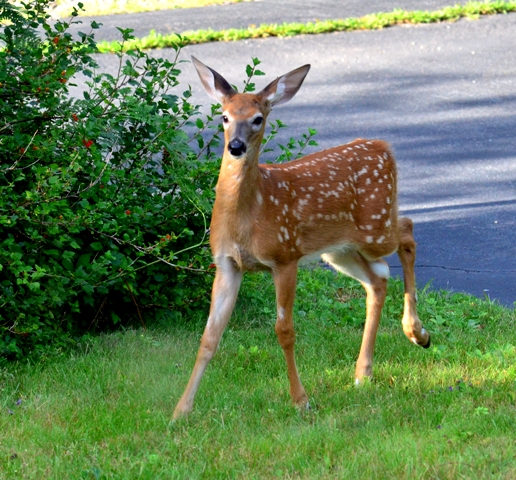
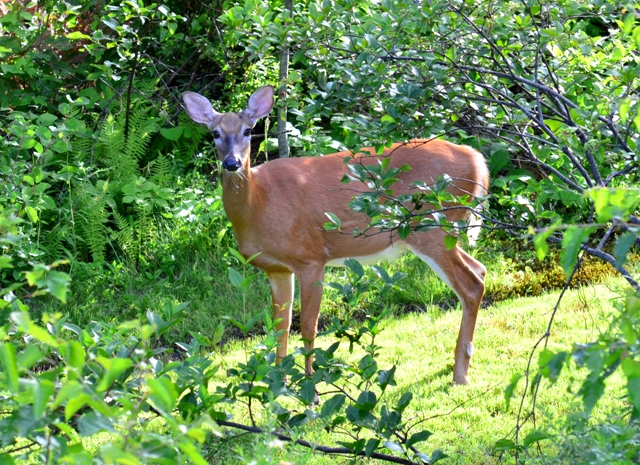
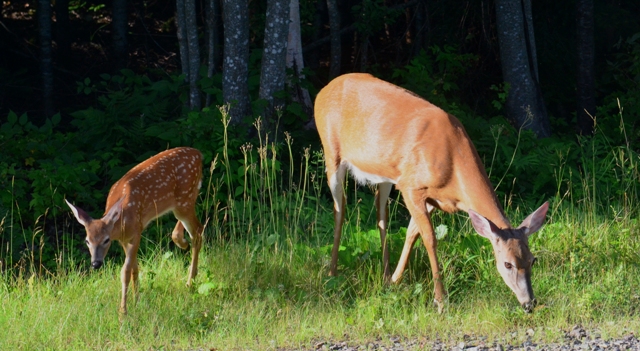
The doe and her fawn stepped into the sunlight.

Fawn DSC_1188

She was hesitant but she let the fawn go ahead, across my lawn to nip the tops off my phlox.

Fawn DSC_1192

A friend was able to capture what I could not.

Promise of lush green

The warm beige of love and peace

Innocence of white  

                                                          – Jo-Anne Hemming

Fawn DSC_1207

Our eyes met. We share this universe, the spirituality of nature but she dare not trust.

God Watches

Under a watchful eye, the new arrival explores the world.

Separated now from the source of it’s life but not alone.

The scene is set, the characters in place, conflict assured.

The author rests—the final scene unwritten

Nature and nurture play their part but choice determines all.

Choice.  A birth day gift from the creator.

– Jo-Anne Hemming

Fawn DSC_1208

The fawn learns from its mother, learns to be cautious.  The eternal cycle of life.


Sweet Memories

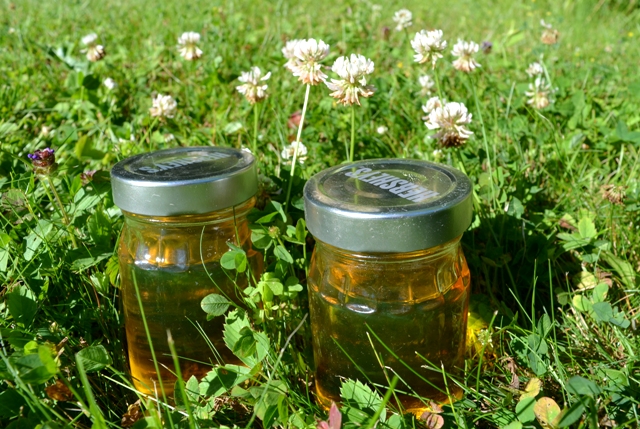
Honey DSC_1148

Yesterday I went to St. Stephen to celebrate the first birthday of the  youngest member of my our family—my brother’s great-grandson. Making the round of family took me to the seniors’ apartments on Deacons Lane where golden jars of honey drew me to a yard sale.

Joanne Fraser confirmed that she had made the honey herself, just like my parents had. She reminded me that all you need is the blossoms of roses and red and white clover, water, sugar and alum.

It has been years since I have seen home-made honey and I felt like a kid again as I remembered picking and counting the blossoms when the wild roses were at their peak. You had to be careful to get just the blossoms and none of the green part.

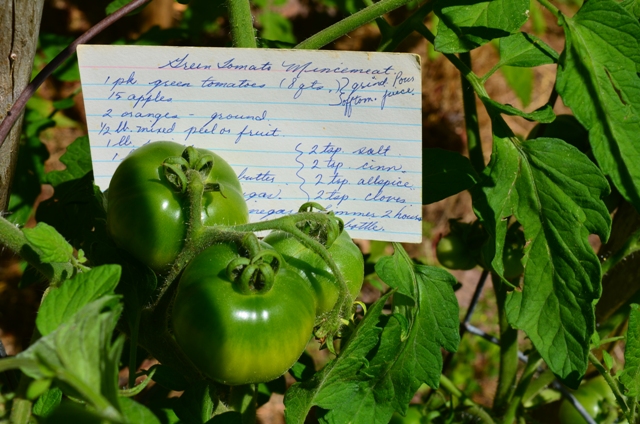
I got the recipe from my mother and my husband and I made it once, in the early years of our marriage. It was good but we decided to leave the work to the bees.  That honey got me thinking of other recipes we made, including Green Tomato Mincemeat. It doesn’t replace the real stuff we now get from my sister-in-law but it is a lot better than that sweet stuff labeled Mincemeat that comes in cans and doesn’t have any meat in it either.

Green tomatoes DSC_1159


Immersed in 1948

I have been away from my writing but now I’m back—in 1948. I was too young to have any personal memories but I don’t have to stretch my imagination to know it was a busy time for my parents.  My mother’s sister and brother-in-law, Hetty and Oscar, had lived with them during the previous fall and winter but in the spring of 1948 they moved to St. Stephen with their daughter who had been born in December.

Then in August of that year my mother’s brother Albert brought his family from Holland to Upper Mills to stay in the upstairs apartment of our home while he looked for business opportunities in Central Canada and the USA.

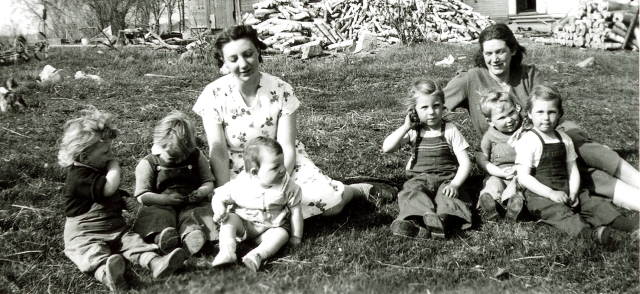
This picture is undated but I believe it was taken in the fall of 1948.  There are no leaves on the trees beside the house and there is a large pile of wood ready for winter.  The summery clothes and sitting on the ground without a blanket suggests a nice fall day.  Unfortunately, my mother is not in the picture; she must have taken it.

Sister Hetty and sister-in-law Elizabeth with children

Cousins, from the left: Rose-Marie (me) and my brother Ronnie;  Mary-Louise with her mother Hetty; Helen, Robbie and Sylvia with their mother Elizabeth

When that picture was taken there were five children under that age of five in the Baxter House. I had turned one on July, Ronnie was two in August, Helen would not be five until November, Robbie was two in August and Sylvia was three. It was likely a Sunday afternoon when Hetty and Mary-Lou had been brought to Upper Mills for a visit. My father had a car but they did not.

.

Ditch Lilies

The Day Lilies in our yard are overflowing with blooms. I have also heard them called Ditch Lilies, a name they can wear proudly as a testament to their hardiness and the beauty they spread with no need for human care .

Every year I welcome their burst of blooms.  Some of my original plants came from my grandmother’s yard and others from a very dear friend. Last year they inspired me to write this floral exchange.

The Flowers in the Field

 Shasta Daisy nodded toward the field and whispered in the breeze. “Look at those ditch lilies running wild. Thank goodness they only bloom for a day.”

Her friends nodded in agreement. “Yes, day lilies are so common, but I suppose it’s not their fault. They haven’t had the benefit of our generations of good breeding.”

The Daylilies stood a little straighter.  “My, aren’t you uppity considering your ancestors arrived here as weeds in the animal feed.  We were brought by the pioneers and, like them, we were tough and our roots have gone deep and far. We added beauty with no fuss to everything that was important to them.”

Shasta smugly replied, “We aren’t  those oxeye daisies. Our lineage goes back to 1901 when Luther Burbank named us after California’s glistening white Mt. Shasta. We are the pride of flowerbeds everywhere and, unlike you ditch lilies, we have long lives.”

A collective hmmp rose from the field. “Daylilies have been here since the 1800s. We wave from overgrown cemeteries and stand vigil by field and farm. We see the smiles and hear the ring of childhood memories.  Furthermore, our  name is much older than yours. Hemerocallis is Greek, that’s hem-er-o-kal-is, and it means beautiful for a day.  I’d rather be a ditch lily, blooming for a day while creating beauty that lasts a lifetime.

Brown-eyed Susan winked to the sun and bent to the Buttercups. “Listen to them. The children playing in our field don’t care. They know we are all beautiful.”                                                                                                                                                    –  Rose Burke, © 2016


Birthday Flashback

There is nothing like a birthday to make one reflect on the past. On July  08, 1947 my mother was at the Chipman Memorial Hospital in St. Stephen surrounded by my father, his mother( my grandmother) and my brother Ronnie as they decided on my name.

As a child I was told that I was named after Princess Margaret. During the war my father had admired Princess Margaret so he suggested I be named after her—Margaret Rose. My mother suggested it be reversed to Rose Margaret. It was my grandmother who  suggested Rose Marie. At the end of the discussion I had a name, Rose-Marie. There is no hyphen on my birth certificate but that is how it was in fact. As a child I was perfectly  happy with my name. After all I was named after a Princess. The story made me feel special.

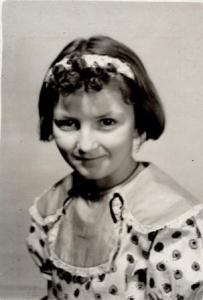
Rose img010
School picture, grade 3 


However, I made a change when I went to high school in St. Stephen. I did not dislike my name and I hadn’t planned it, but I introduced myself as Rose—no Marie, no hyphen. I guess I just wanted to be a new “me”.  I was still the same person but my revised name stuck and that is who I have been to everyone I have met since then. It was several years before marriage changed my last name from then Smith to Burke. No more changes planned


Miss Petunia is no longer Welcome

Yesterday she stepped out of the shade and looked both ways before cautiously stepping onto the driveway. Then she paused to have her picture taken. The day felt special.

Today is a new day and the first thing I noticed was the hoof prints in the flower bed just in front of the door. The three flowers cropped close to the ground were not a big concern but then I noticed the flower pot that had so recently been overflowing with Purple Wave Petunias. It had been neatly pruned all the around the edge and nearly all the lovely blooms were gone from the top. That was when my less than sympathetic husband named her Petunia and said I suppose she needs to eat too. 

Miss Petunia had also strolled through the yard and I noted her preferences. There were only a few twigs missing from the Mountain Ash and the Horse Chestnut sapling—perhaps a little too chewy.  Hostas are tasty—half a plant was enough as an appetizer, with a few Columbine tops. Then came her main course, a nice long row of Phlox just getting ready to bloom—flower buds are the best.

Miss Petunia, you are no longer welcome. Please cross my yard off your list of favourite dining locations and please do not recommend it to your friends.


A Proud Day

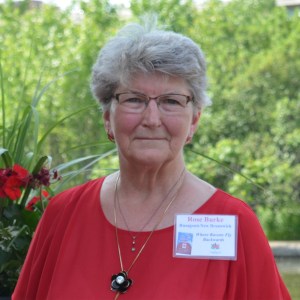
Face square DSC_0362

Canada Proud

On the evening of June 13, 2017 I proudly attended the of launch of The Spirit of Canada, the Chicken Soup for the Soul edition honouring Canada’s 150th birthday and celebrating the diversity of our country. I am proud to be Canadian and proud to be one of the book’s contributors.  Together, the stories provide a mosaic of Canada’s diverse geography and cultures with the clear message that Canada’s greatest treasure is how  people connect with each other. The Canadian spirit extends a hearty welcome, it shares freely and is always there in times of diversity. It is in every family’s experiences; it is in our laughter and our sorrow, in the ordinary and in the extraordinary.

In my story Where Ravens Fly Backwards, I recalled my experiences as a young teacher in Payne Bay, an Inuit community in Northern Quebec. However, on the day of the book launch my thoughts were flying back even farther. My father, Sidney Smith, was third generation Canadian—his great grandfather had come from Scotland. My father fought for Canada’s freedom and my mother, Selma (Kater) Smith, was welcomed to Canada in 1946—a Dutch war bride eager to embrace her new home.

DSC_0362 b

Heritage Proud


My mother lost her mother, Johanna Roels Kater, in 1939.  I lost my mother in 2004. To honour my mother and the grandmother I never knew,  I wore a precious family heirloom.   Continue reading

A Rusty Reminder

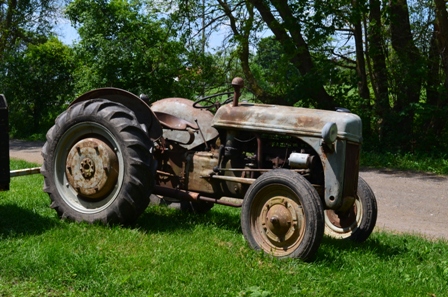
DSC_0320 for web

I am visiting my brother and he tells me this tractor on his lawn is a 1946 Ford. The one our father purchased many years ago was the 1947 model, also in classic grey. If it was not new when he bought it, it was only a couple of years old and a lot newer than any car he had at the time. Sidney liked mechanical things and I am sure he was very proud of his tractor, with its 3-point hitch and a power take-off.  The plow could be raised and lowered mechanically and I remember the whine of the wide belt that would run from the power take-off to a bench saw, making it so much easier to transform long lengths of trees into stove wood sticks. My father was able to adapt some of the equipment he had used with our horse Cappy and some he sold or bartered for things he needed for the tractor or for the car.

My mother noted in a letter to her brother that they could till so much more land with the tractor . . . then added that the more land they cultivated, the more work there was to be done.  It appears that the labour the tractor saved on one end was just added on to the other end.  But those were optimistic times and neither my father nor my mother were afraid of hard work.

A different kind of chicken soup.

Chicken soup cover_art_209298 I am off to an event that would have given my mother a smile of pleasure. She had a way with words and, for many years, she wrote the Upper Mills news for the St. Croix Courier and it was enjoyed by many people who didn’t even know anyone in Upper Mills. She did some writing and recalled her arrival in Canada in Homeland to Homeland, a personal essay published in Treasued Memories. My mother enjoyed the Chicken Soup for the Soul books and I still have some of her favourites.
The Spirit of Canada is now in stores and tomorrow I am flying to Toronto to attend the official launch because . . . one of my stories, Where Ravens Fly Backwards, is included in this celebration of Canada’s 150th birthday.

I am proud of my country and proud to be a contributor.  Selma (Kater) Smith was born in Amsterdam but she embraced her new country with all her heart—I can not think of one way in which she was not Canadian.  My mother will be in my heart and I know her spirit will be close as I am signing books and enjoying the launch of The Spirit of Canada.

First Impressions

Bot. Garden DSC_0014

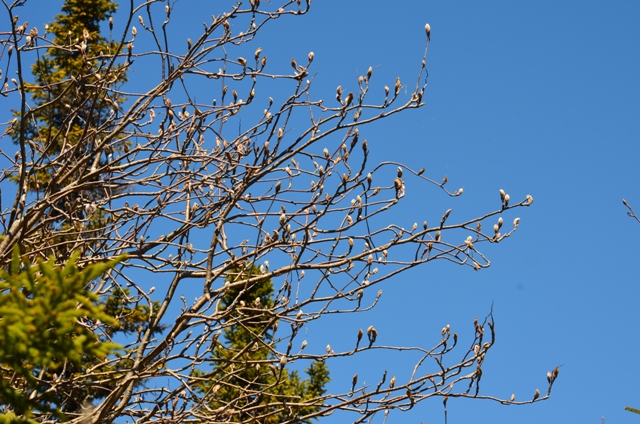
My mother’s story was still on my mind as we landed in St. John’s, NL. We had planted our vegetable garden before we left, the daffodils and tulips had been fading fast and there were dandelions everywhere. The leaves in the trees were not yet full size but they were  lush and green.  Not so when we left the airport. It was cold. And in the coming days we heard a common refrain. I can’t remember when we have had such a cold, late spring.

Is that what it was like when my mother arrived in New Brunswick in May of 1946? She had left the colour of her familiar Dutch spring and, in the optimism of a March  burst of false hope that spring was close, my father had written that the weather is nice all the time.  But, in reality, the Maritime spring that year was late and cold.  Continue reading